
Finding Brookline Residents by Clue
Start from what you already know. A full name, an address, or a year shapes everything after it. Give the search an address first. The Town Assessor and GIS then establish the parcel, the recorded owner, and the mailing field. For a past household, the Brookline Room's Street Lists and directory volumes tie a name to a particular year. A name that also surfaces in a deed, newspaper item, or town record becomes a stronger match. The Brookline residents directory is a comparison of sources. It is not one current list.
Each record answers a narrower question. An assessor card names the owner or mailing addressee, not everyone inside a building. A deed names only parties to a recorded transfer. The statewide voter tool exists for checking one's own registration, while a Street List, arranged by street and covering residents age 17 and older, is often the most direct historical address evidence in Brookline.
- Resolve the address in Patriot Properties WebPro or the municipal GIS, and save the parcel ID with the street spelling.
- Check the Norfolk Registry research portal for the recorded transfer trail and try its separate Land Court index when necessary.
- For an older household, compare the nearest Brookline Street List and city-directory volume at the Brookline Room.
- Use newspapers, obituary indexes, town reports, or a case record only when they fit the question and the access rules permit it.
- Send a precise written request to the custodian when the relevant municipal record is not online.
Brookline Offices Behind Resident Records
Brookline keeps its records at several levels. The Town Assessor links a parcel to assessment and owner fields. The Town Clerk and Registrars handle municipal records, elections, Street Lists, and local certificate routes. Norfolk Registry of Deeds holds the land record trail. No office maintains a universal list of residents. But their indexes together establish useful, limited facts.
Town of Brookline Assessor
Town Hall, Room 215
Brookline, MA 02445
617-730-2060
Brookline Town Clerk
333 Washington Street, Room 104
Brookline, MA 02445
617-730-2010
The Town Clerk's service page lays out its public-records, election, and town-record duties. It is the right first stop for a municipal record that lacks an online home.
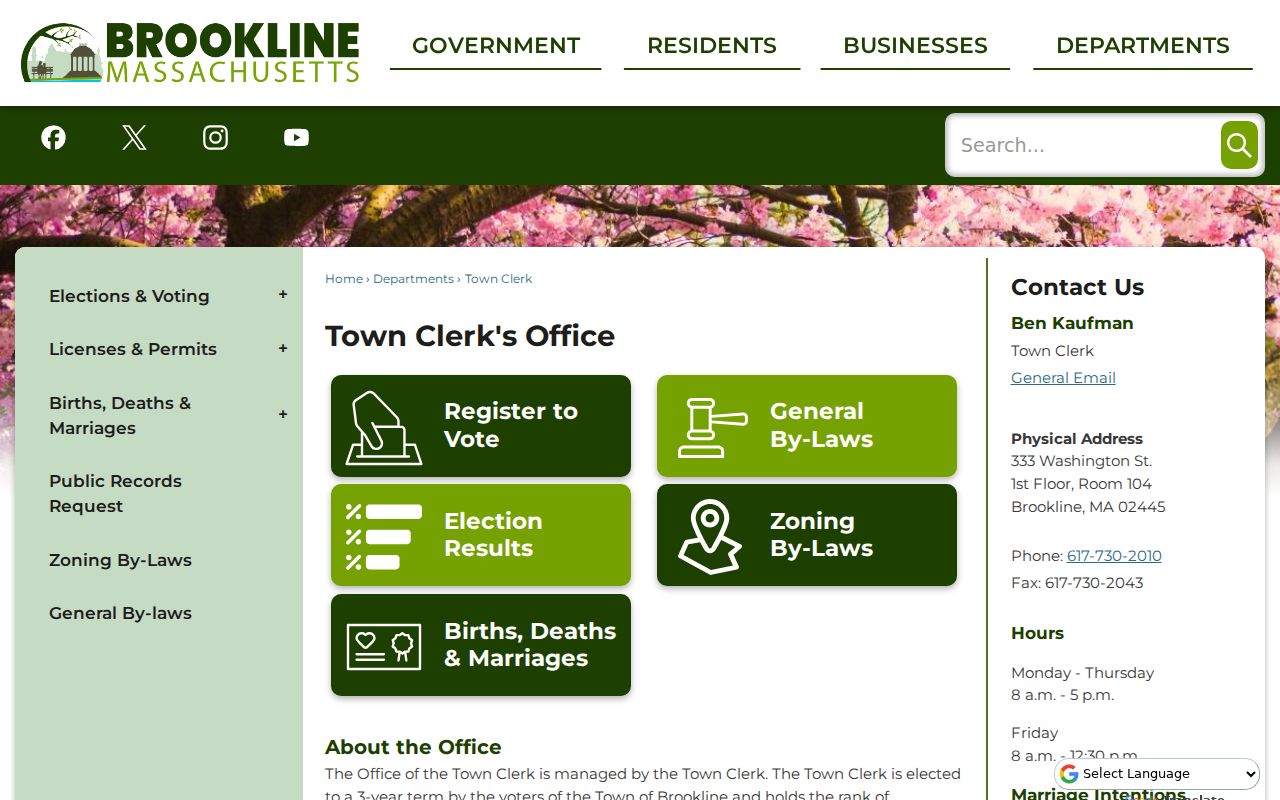
That role separates local, county, and state record routes.
Brookline Parcel Cards Separate Addresses
The assessor's WebPro card keeps the situs, the property's location, separate from the owner's mailing address. It also lists parcel ID, class, legal reference, sale date and price, building traits, values, taxes, and GIS links. The split matters in a Brookline residents search. A mailing field can be a post-office box, a business, or an address in a different city. An owner name does not prove occupancy. The parcel may hold someone else entirely.
| WebPro field | What it establishes |
|---|---|
| Address or location | The situs used to find the parcel |
| Owner name | Recorded assessment owner, which can differ from an occupant |
| Parcel or map-lot ID | A stable local key for matching GIS and deed research |
| Sale and value fields | Assessment and transaction context, not a resident list |
Patriot Properties WebPro is the official starting point for assessment searches. The live interface supports address or owner lookups. The labels appear only on the live page. Meanwhile, the Massachusetts voter-information access rules separate inspectable fields from those withheld from public use.
Assessment evidence earns more weight when paired with a dated directory or Street List. On its own, it is no household roster.
- Parcel
- A defined piece of land tracked by the assessor and map system.
- Situs address
- The physical property location, separate from an owner’s mailing address.
- Index
- A finding tool that points to a record, not necessarily the full record image.
- Criss-cross directory
- An address-arranged directory used to work from a street back to names.
Brookline Voter Information Has Limits
Massachusetts law lets local officials release defined voter-record fields. Phone, email, veteran status, permanent-absentee status, confidential-voter information, certain minor data, and some public-safety data stay protected. The online status form is deliberately narrower than a directory. It asks for the voter's name, full date of birth, residential ZIP, and an individual-use agreement. It returns registration and polling details only.
| Status form field | Input | Use |
|---|---|---|
| First and last name | Required text | Identifies the individual voter |
| Date of birth | Required month, day, and year selectors | Separates same-name voters |
| Residential ZIP | Required five digits | Part of the individual status check |
| Agreement checkbox | Required | Confirms the form’s individual-use purpose |
The Massachusetts voter status search serves the voter. It is not a name-only resident lookup. Historic Brookline Street Lists at the library offer the address-arranged local route, within their own scope and access limits.
The individual form’s required fields illustrate why it cannot replace a public street-by-street roll.
Norfolk Deeds Build a Brookline Trail
Norfolk Registry of Deeds began recording land in 1793. Recorded Land runs online from 1793 forward, while Land Court records begin in 1900 in a separate index. Start with the current owner or address. Inspect the latest deed. Then search the named prior grantor to move backward. A deed gives a recorded party, a recording date, a legal description, and a document reference, but it does not prove present residence.
The Registry offers free online viewing and printing with a "Not an Official Copy" overlay. A free login permits clean-image printing. The Registry also describes an annual subscription and per-page document use. Certified and mailed copies follow separate fee routes. Plans, searchable by street, owner, plan number or year, Book/Page, and surveyor, help explain a parcel edge or subdivision.
Note: Search both Recorded Land and Land Court before treating a missing web result as a missing ownership trail.
Current Brookline Resident Directory Sources
Current Brookline sources differ in coverage. A parcel card reports ownership and mailing data. A deed index reports recorded parties. The Town's community layers show neighborhood context, not a roster of each resident. The strongest result names the kind of record behind it, and a one-name question still deserves the same careful verification order.
| Brookline source | People connection | Custodian | Access |
|---|---|---|---|
| Assessor WebPro and GIS | Recorded owner, co-owner, mailing and parcel fields | Town Assessor and GIS | Public municipal search/map |
| Annual Street List | Persons 17+ at address in a dated local publication | Registrars and Brookline Room | Library and historical routes |
| Norfolk deed index | Grantors, grantees, and recorded transfers | Norfolk Registry | Online index and counter |
| Community organizations | Named area and group context | Town community pages | Not a verified member roster |
A commercial people-finder may blend old records with sold data. It cannot make an unsupported result current. For family history, reconnecting, estate, and neighborhood questions, official custodians, dated source images, and two independent matches are the stronger anchors.
Brookline Courts and Vital Events
Brookline court questions start at the Massachusetts Trial Court docket portal. Its civil side searches by last and first name. Criminal matters usually want a docket number instead. Jurisdiction splits among Brookline District Court, Norfolk Probate and Family Court, Norfolk Superior Court, and Land Court. Sealed, juvenile, impounded, and protected files never surface as ordinary web results. So a courthouse public terminal or a clerk is often the real next channel.
Vital records track events, not residents. The Town Clerk handles eligible Brookline birth, death, marriage, and residence or voter certificates. State RVRS holds 1936 to the present. The State Archives serves 1841 to 1935. Earlier custody can depend on the event or the marriage-intention town. Massachusetts applies a 90-year threshold to births and marriages. It sets 50 years for deaths, plus additional special restrictions.
Channels differ by custodian. The Massachusetts vital-record ordering guidance describes online, phone, mail, and in-person routes. Brookline's own Clerk route often fits a qualifying local event better.
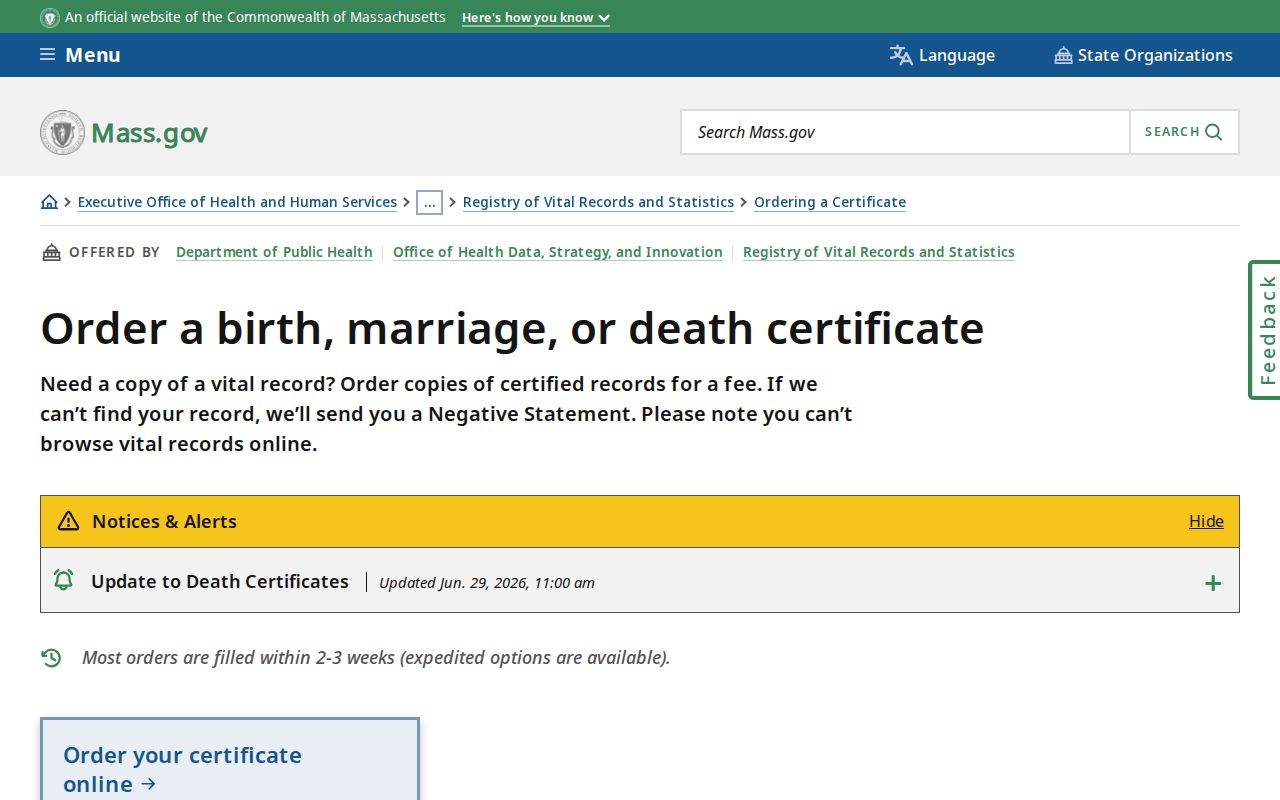
Ordering confirms an event, not a browsable name-and-address file.
Brookline Historical Resident Directories
Brookline's historical holdings arrive in patches, and that rhythm matters. The Brookline Room holds city directories. They cover 1875–1889, 1891–1920, 1922, 1924–1932, 1934, 1940, 1944, 1966, and 1968. Street Lists reach from 1891 to the present. Some are digitized through Internet Archive. Around them sit Blue Book volumes, yearbooks, tax and poll lists, obituary indexes, and newspapers. A missing directory year simply means the shelf has a gap. It never proves a person or home was absent.
The Brookline city directory walks through the collection in depth. A quick historical check works best this way. Take the closest directory and Street List. Keep the printed street spelling intact. Then weigh the result against a deed, map, newspaper, or town report.
Brookline Public Library local history staffs the desk. It covers the Room, local indexes, newspapers, maps, and licensed genealogy tools.
A defined municipal record calls for the Town of Brookline public-records request route. Don't assume a historical collection lives online.
Old records live in many places. A source may sit online, on microfilm, or in a reference collection, so a no-hit web search is not the end of the local trail.
Brookline Street Names Change Searches
Old addresses can mismatch modern maps. Worcester Turnpike became Boylston, and Cross Street became Hammond. Road history shapes how addresses appear in maps and directories. Local-history material also reports that Brookline Avenue and Longwood Avenue numbers changed after the 1890 Blue Book period to align with Boston town-line addressing. Treat that as a lead, not a ready-made conversion rule. Verify it in the relevant volume and map.
Harvard Avenue shows why physical sources matter. A house at 66–68 Harvard was built about 1847. It was moved in 1893. A modern number alone cannot resolve that building trail. Deeds, atlas sheets, Sanborn maps, and house-history files can. The full address method belongs on the Brookline street directory page.
Brookline ZIPs Need Parcel Checks
Brookline's three core postal ZIPs are 02445, 02446, and 02467, yet postal geography and municipal geography are different things. Chestnut Hill spills across Brookline, Boston, and Newton. Official Brookline maps also show border appearances for 02135 and 02215, while 02447 shows up on municipal post-office-box mailings rather than as an established general street ZIP. Verify the full address with USPS first, then compare the municipal GIS and the parcel location.
That extra step keeps four distinct facts apart: postal city, municipal boundary, situs address, and parcel. It also stops a directory match from being pinned to Brookline just because a border ZIP surfaced in a source.
Brookline Programs Protect Addresses
Massachusetts public-records law sets the baseline for requests. Chapter 66, §10 lets any person submit a written request for defined records. Agencies generally answer within ten business days. Confidentiality rules still sit on top of the statute. Confidential voters, protected vital data, juvenile and sealed court material, RMV records, certain public-safety files, and Address Confidentiality Program addresses all follow their own laws. An office may redact exempt material. It can also demand a clear date range or a sharper record description.
An online index may come up empty. When it does, use the channel that keeps the record. The Town Clerk accepts written municipal requests at Room 104 and through the Town request route. The Registry is broader. It offers online research, a Dedham customer center, phone support, mail copy procedures, and a Records Access Officer form. Courts may require a clerk or a public terminal. History has its own custodians. The Brookline Room, the State Archives, and the Historical Society each serve different material. Name the custodian and record type. Add the relevant name or parcel and a date range. State your preferred electronic format. That detail helps an office separate a searchable public record from material restricted by law.
The Address Confidentiality Program gives qualifying survivors who recently relocated a substitute address and mail forwarding. It cannot erase every earlier disclosure, but it blocks release of the real address through ordinary public-record channels, so a protected or missing result reveals nothing about where a person lives.
Note: A precise request naming the record, office, date range, and format is more likely to reach the right Brookline custodian.
Brookline Records Projects Are Still Pending
Brookline once reported a vital-record digitization project. The goal was a searchable birth, death, and marriage card index. It would cut staff time in the vault. The 2025/2026 report marked the project “Not Started.” That status held. It held despite budget obligations and expenditures. The project describes future retrieval, not an index anyone can search today. The Town Clerk’s planning materials also sketched work on older records, voter files, and by-laws.
That context matters when research hits an offline route. Date and custody decide the route. Choose the Town Clerk, RVRS, State Archives, or Brookline Room by the record’s date and custody. Do not assume a digitization announcement made everything searchable.
Brookline Specialized Lookup Systems
Some records live in purpose-built systems. Massachusetts DOC locator instructions point to a correctional locator. The Sex Offender Registry Board keeps its own public-information and request rules. Neither source is a general residents directory. An absence from either one proves nothing about whether a person or record exists.
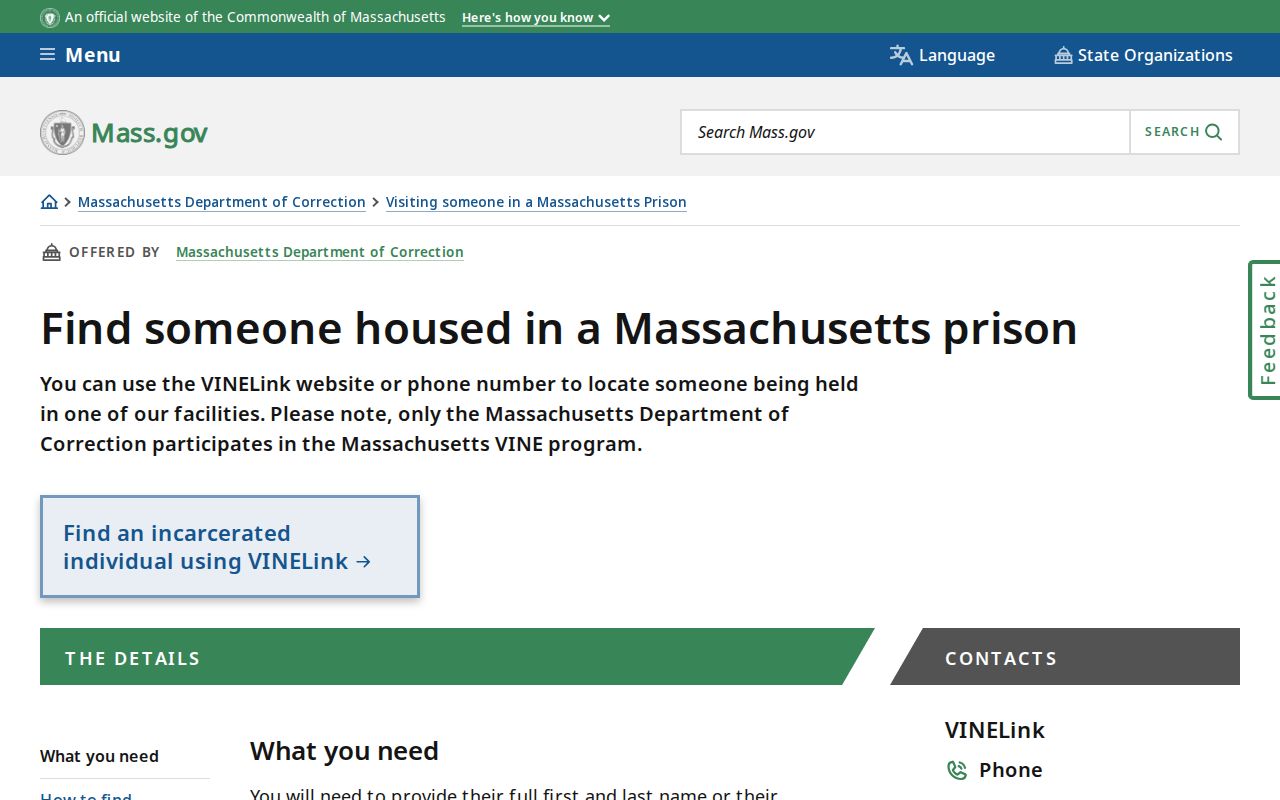
The correctional route stands apart. It is separate from the property, library, and court sources used for ordinary Brookline research, and SORB public-information guidance likewise covers a distinct statutory system with its own classification limits.
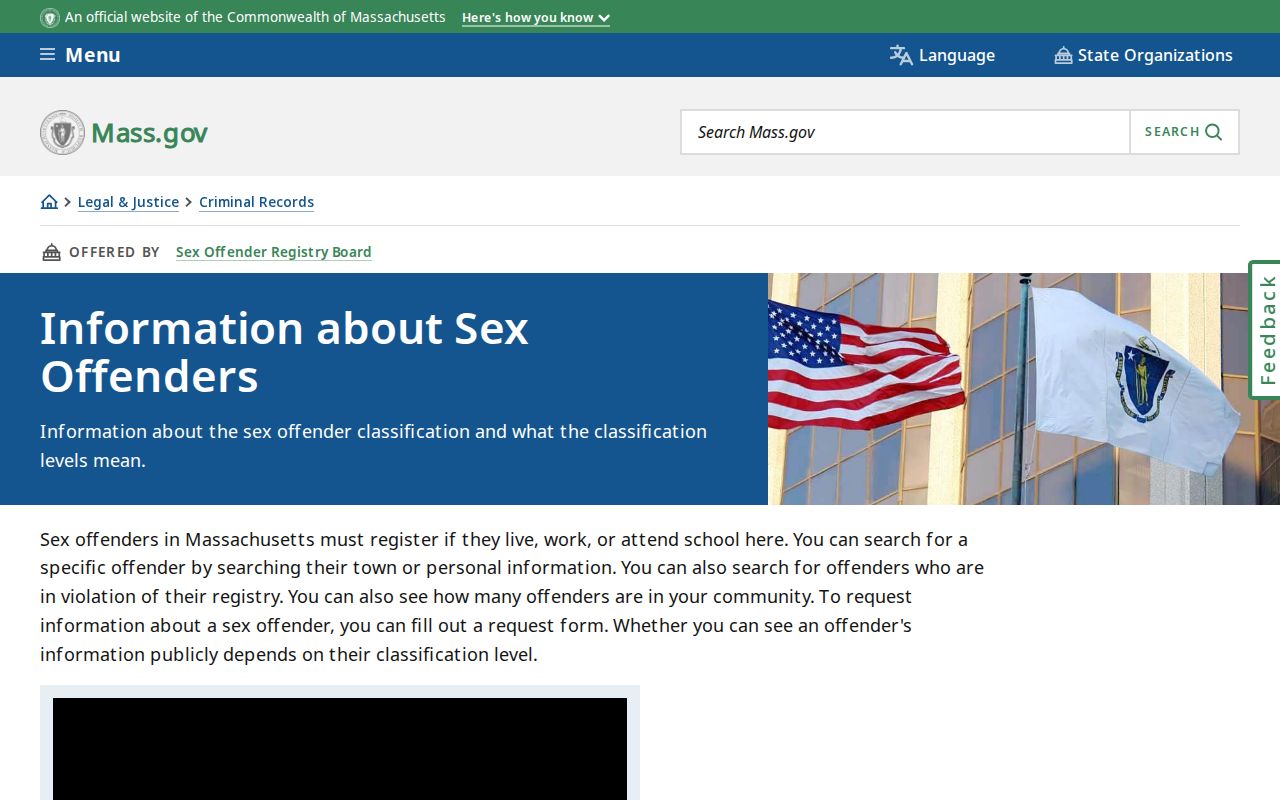
Use the SORB route only for its stated purpose, and respect the limits attached to its results.
Brookline Entity Records Add Context
A Massachusetts corporate filing can tie an entity to officers, managers, signatories, a registered agent, or a business office. That helps with entity questions. It does not prove where a person lives. Brookline’s Town Clerk also handles assumed-name filings. A DBA records an assumed business name, not an operating license or a household index. The Massachusetts corporation search offers entity, individual-name, identification-number, and filing-number routes. Match each result to the filed record and its date. Only then treat it as context for a property or historic directory result.
Entity records add dated context to a Brookline record trail, but they never prove occupancy.